One of the great reasons to travel: to learn things about countries beyond what one would even think to ask and beyond what a native would think to mention. (I notice this in literature, too. For example, when reading a book written in the 19th century versus reading a book written in the 20th/21st century and set in the 19th century, different details are written or assumed.)
So, here are some things I noticed and some questions:
- Expressions of thanks are often accompanied by a hand on the heart or chest, sometimes with a slight bow. I liked this gesture a lot. It respects the culture of not much touching, and it is easy to communicate even when languages are different between and among folks.
- Gina did not worry about leaving her purse in the cart unattended while we were at a supermarket. She stated the rate of crime was so low and the country is so safe. I couldn’t get used to that, and I continually held my purse near to me.
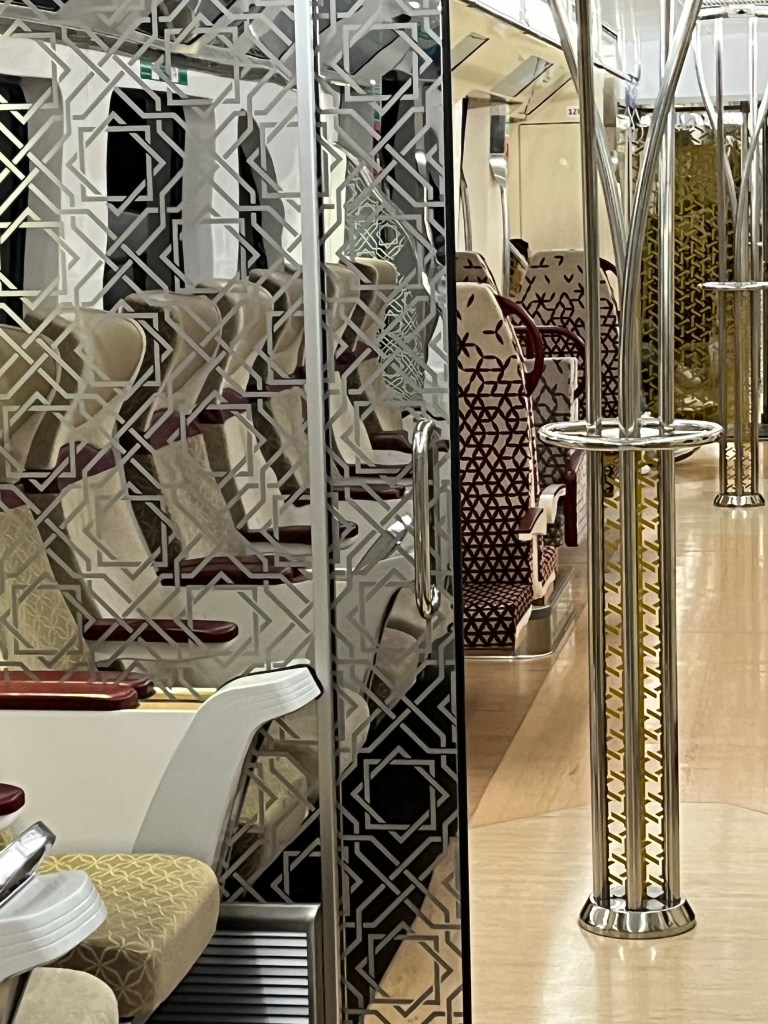
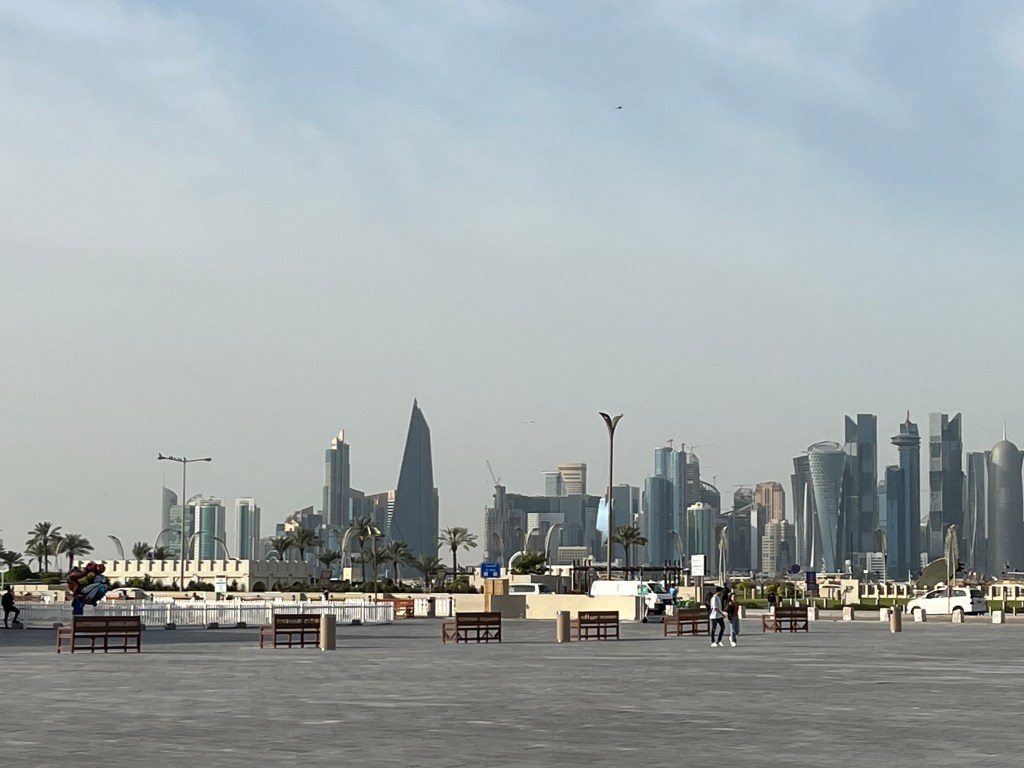
- Qatar was much more modern than I expected, with very new buildings, subways, etc. I expected a lot more old buildings (like 1000s of years old).
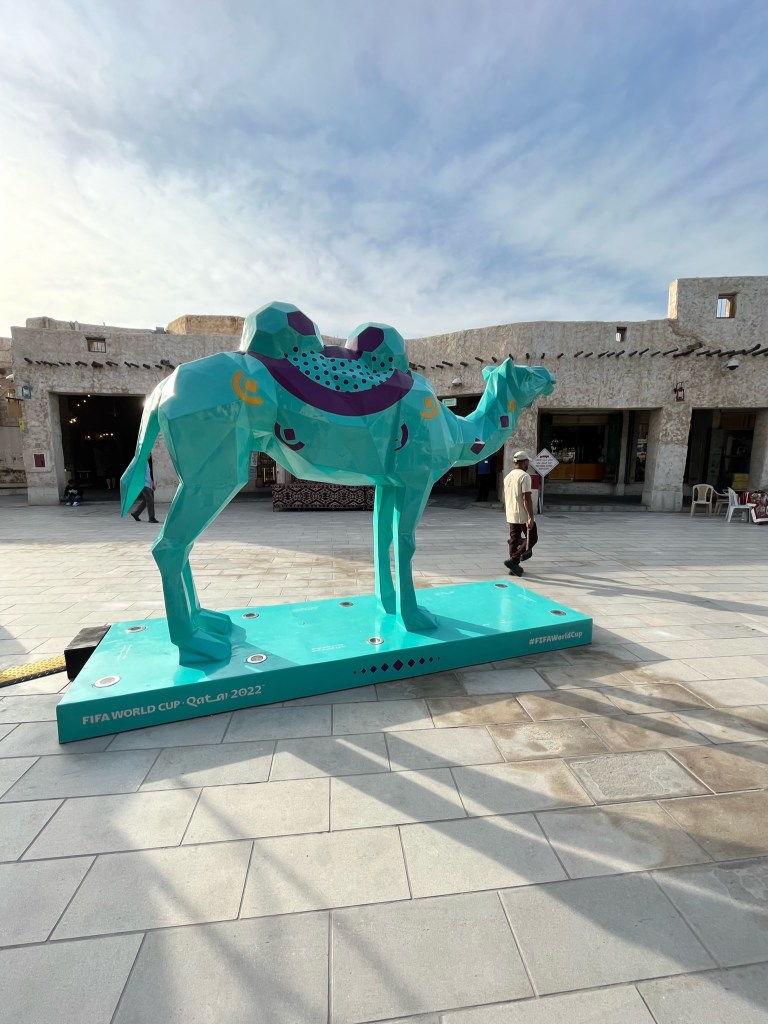
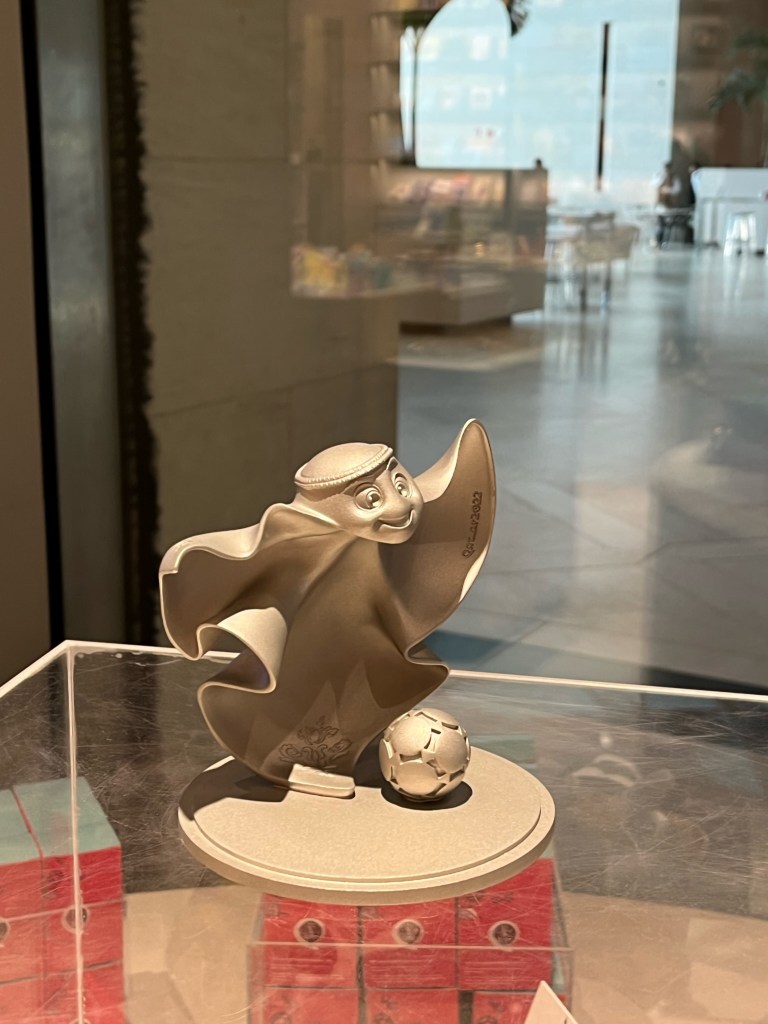
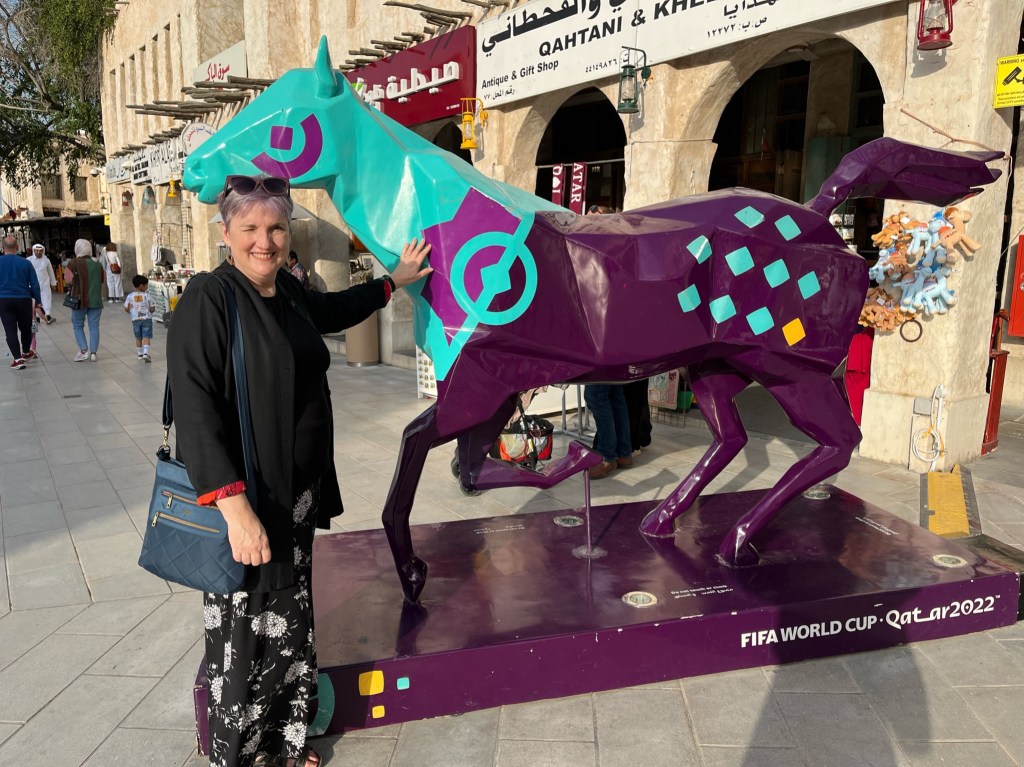
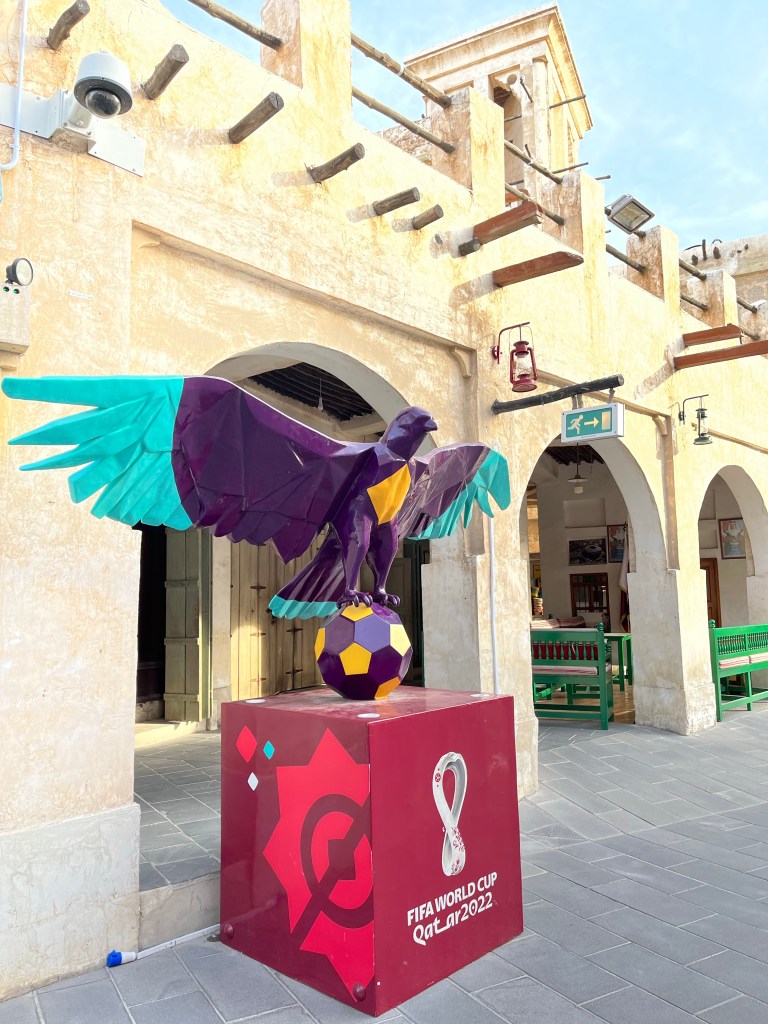
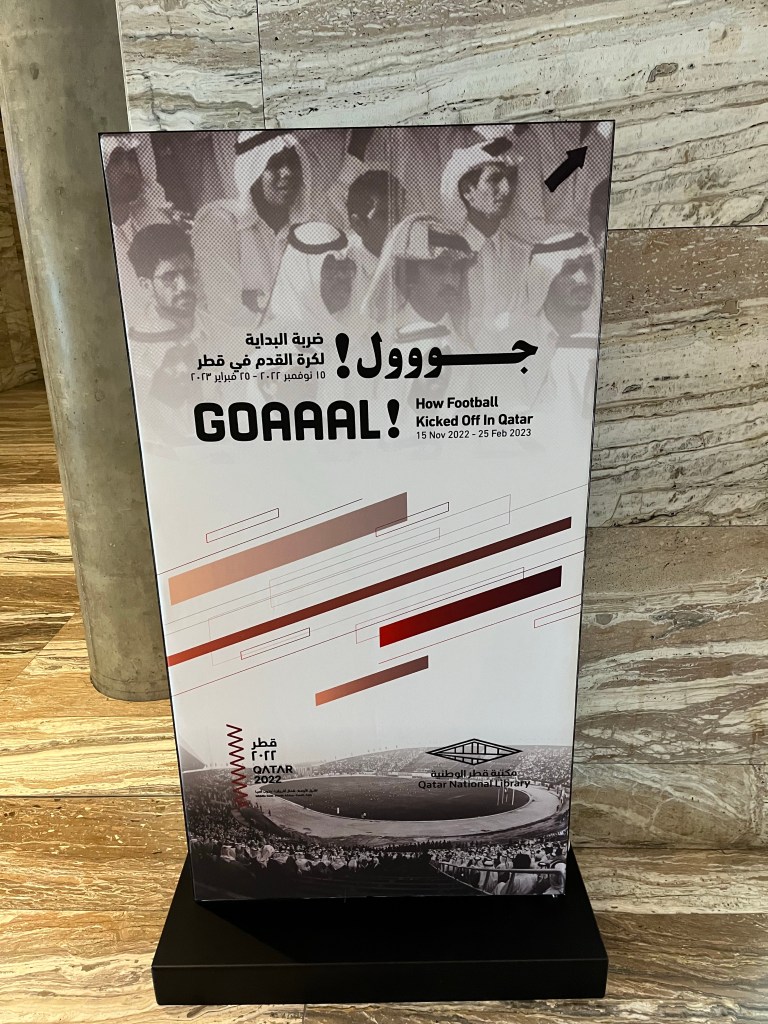
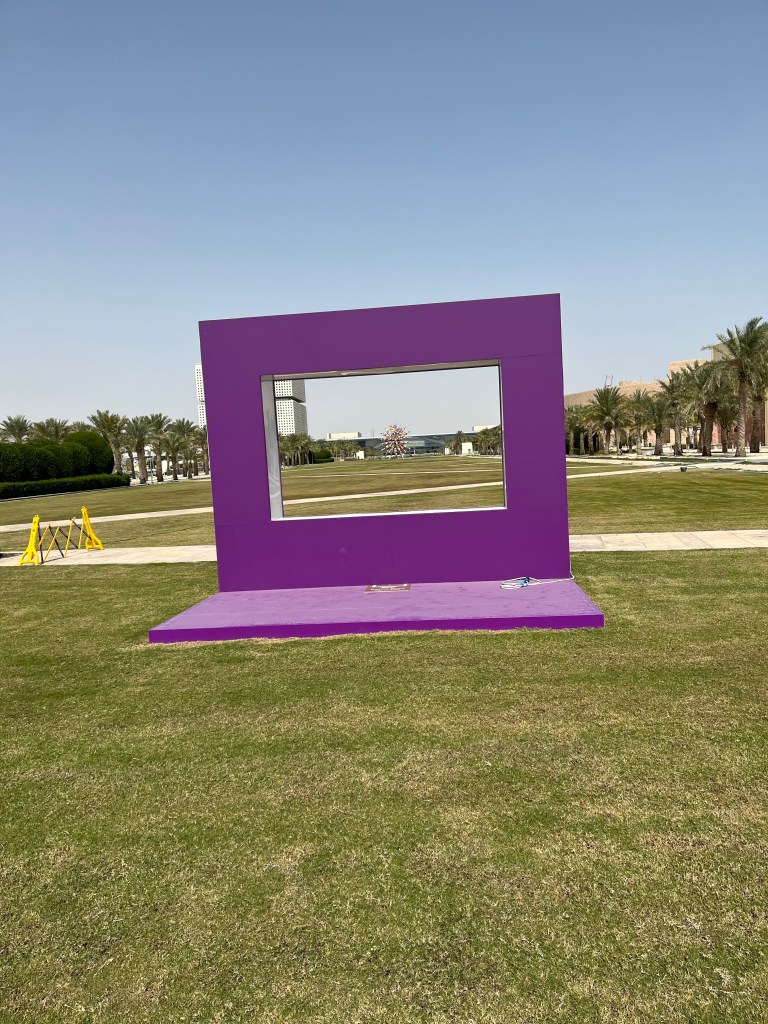
- I expected correctly to see relics of the world cup/FIFA.
- I didn’t see much poverty. Of course there were people working in jobs that paid less (Uber drivers, eg) and I know there were people who have less financial stability, but I did not see anyone requesting food or money on the streets, or anyone who appeared homeless. This could reflect the areas we visited, or just that it is a wealthy country; not sure.
- Clothing worn by (presumably) Muslims varied quite a bit by individual and family. It made me very curious about the traditions and how different individuals and families decided what was best for them, how strictly the religious leaders enforced the requirements, is their policing by others? (Once I was in a shop and the male clerk did not have on his hair cover, someone outside the shop said something to him and he put on a head piece. Why?). I feel these are questions I can research and will. NOTE: I didn’t take any pictures of people in traditional clothing because I felt it would be disrespectful.
- Throughout Doha there were many mosques, large and small, for Muslim people to pray. Near the airport there was an area with churches and temples for non-Muslims, but NOT for Jewish people. It made me very curious how a Jewish tourist or employee would be treated, or if they are even welcome. I have Jewish friends and colleagues who have visited Weill Cornell; did they have to hide this part of their identity? I feel my privilege. I feel concerned about how this type of institutional or political decision sets up interpersonal relationships. I need to learn more.
- Qatar is known as a more progressive Arab, Muslim country, yet there are still inequitities between men and women. I wonder if this feels right to the majority of the population? I am curious how members of the LGBTQ experience life in Doha? I know this was a question debated during the World Cup, but I was not paying much attention, dealing with my own issues of grief and family, so I need to go back and learn more about that.
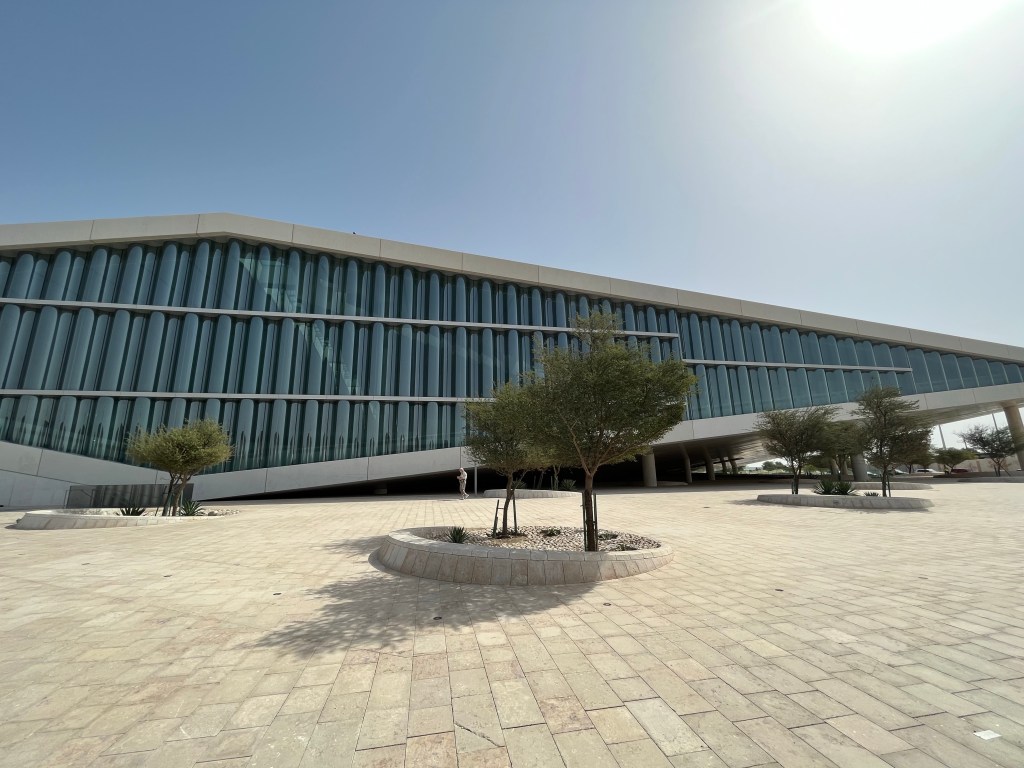
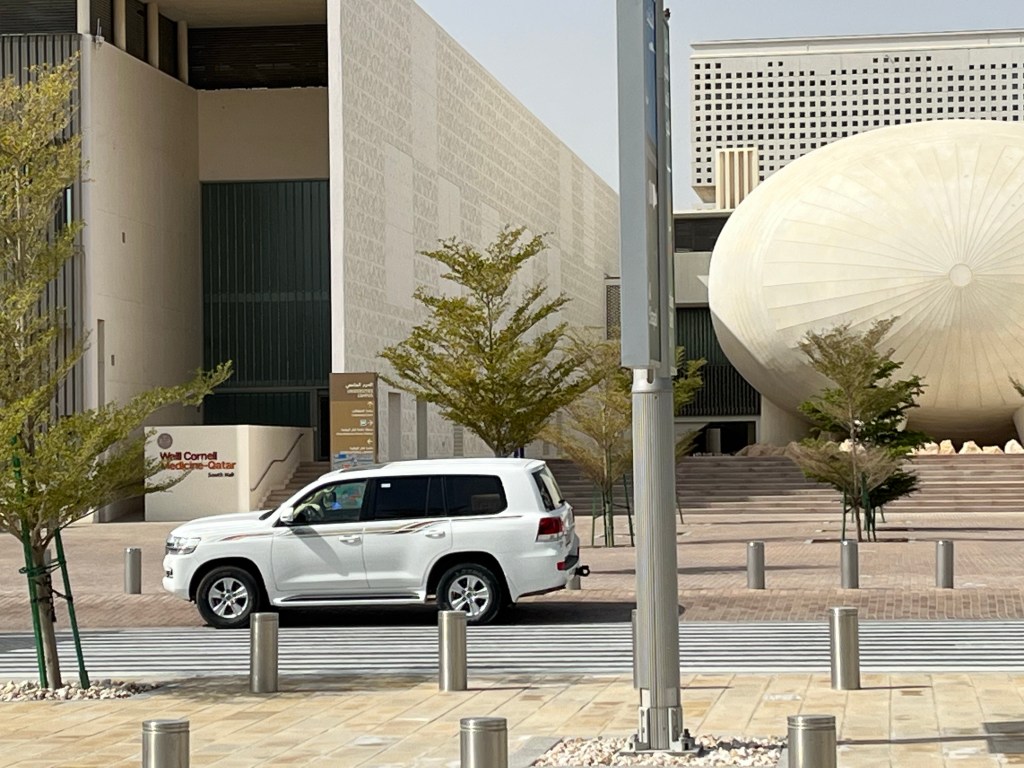
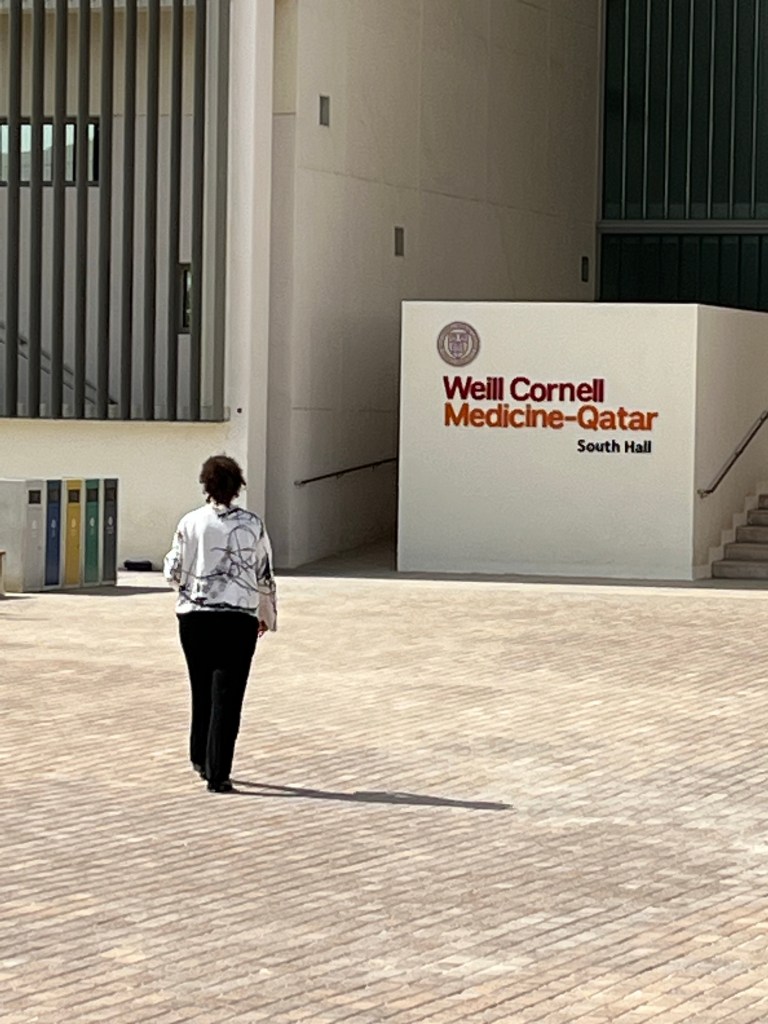
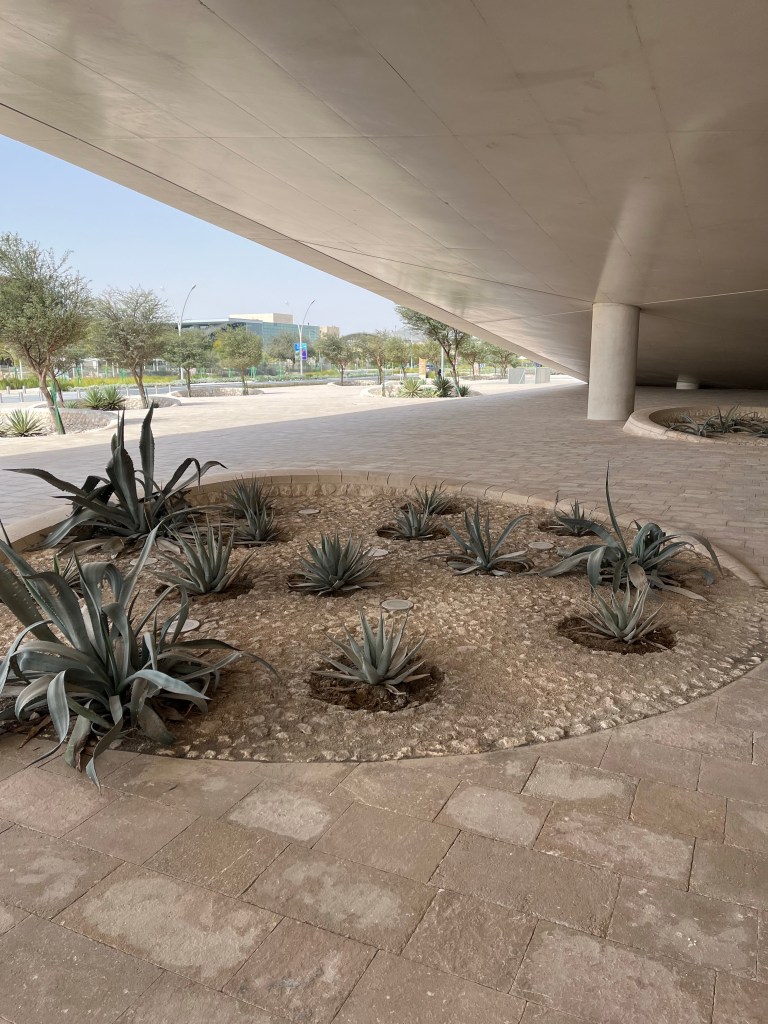
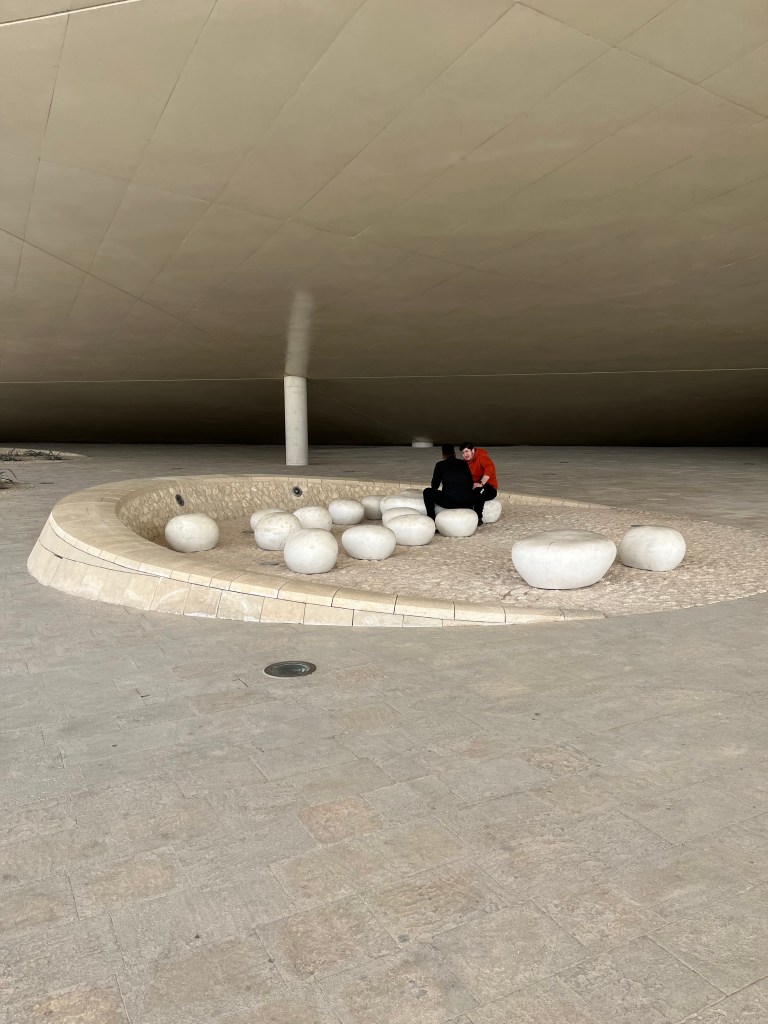
- I was curious what Education City would look like. I was glad to walk around, but I didn’t take many pictures!
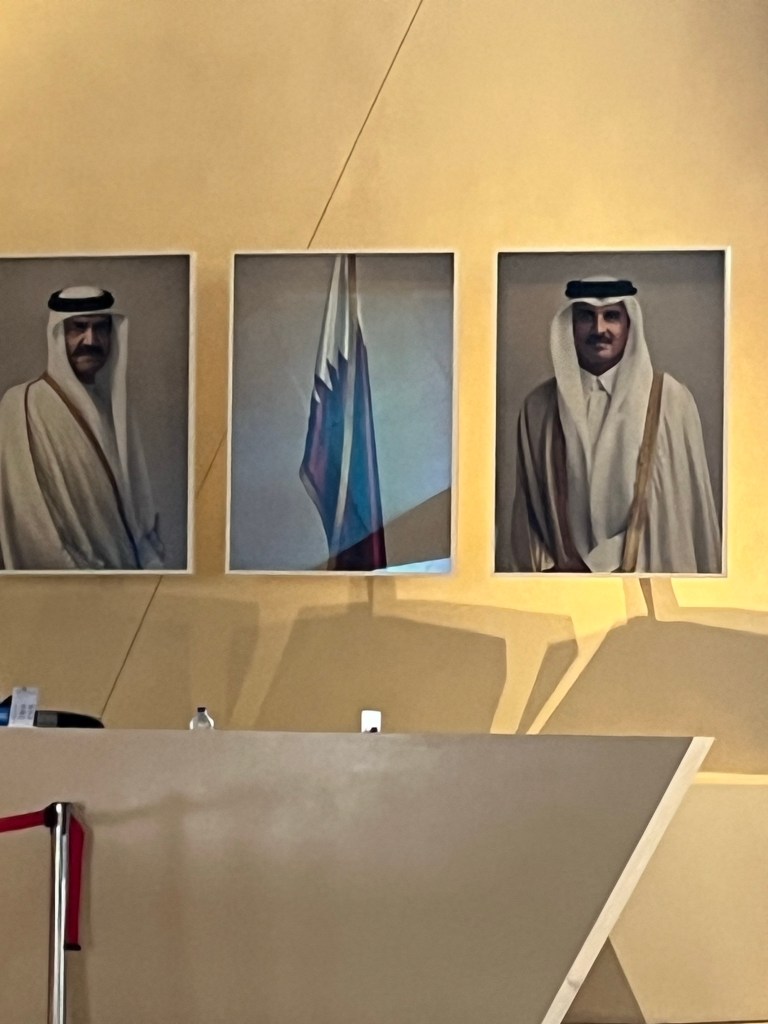
- A picture of the Emir and his father were displayed in many businesses. This family has served as the royal monarchy since Qatar got its independence. The prior Emir is still alive and was very popular, as is the current Emir. I didn’t pay close enough attention to note whether all businesses or only government related operations had these pictures. I think a restaurant or hotel we went into did,though. If so, why would a private business have a governmental figure pictured at the front desk?


 MB Meets World
Leave a reply to Betsy Cancel reply